
DHYANA
YOGA NIDRA APP
ROLES
UX/UI DESIGNER
PROJECT DURATION
14 DAYS
TOOLS
FIGMA | FIGJAM | GOOGLE FORM
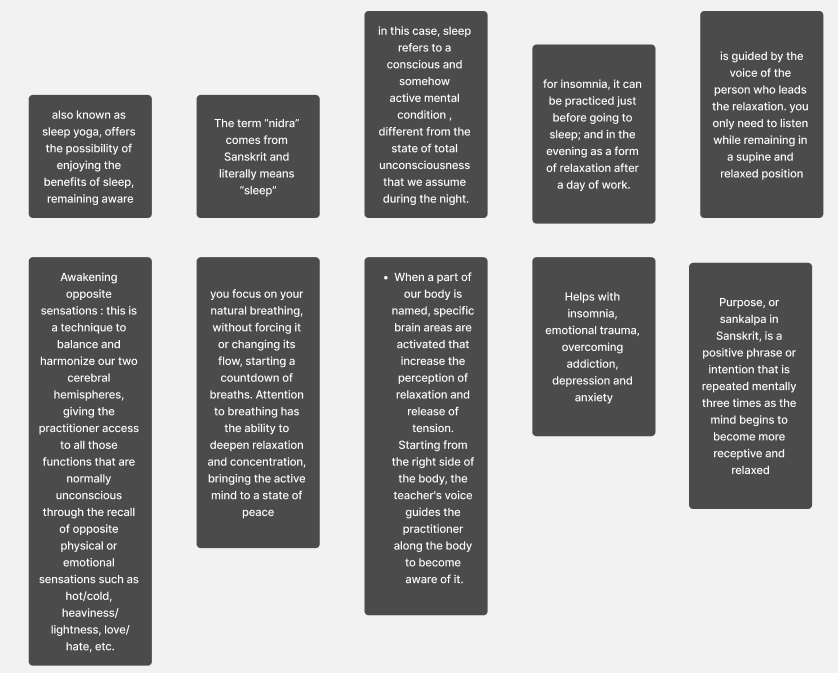
Yoga Nidra, also known as "yogic sleep," is a powerful meditation practice that guides you into a state of deep relaxation and consciousness, lying comfortably between wakefulness and sleep. Unlike traditional meditation, where you might sit in silence, Yoga Nidra is usually practiced lying down, allowing your body and mind to unwind completely while you remain fully aware.
The benefits of Yoga Nidra are profound. It offers deep relaxation, helping to release stress and tension in both the body and mind. For those struggling with sleep issues, Yoga Nidra can improve sleep quality and help with insomnia by calming the nervous system. The practice also aids in stress relief, reducing anxiety and making it easier to manage daily challenges.
WHAT HAPPENED
The process began with an in-depth primary and secondary research phase focused on the topic of sleep and its impact on overall well-being. Extensive scientific articles reveals the significant negative effects of poor sleep on the body, including reduced energy levels and increased stress. This research also highlighted the efficacy of Yoga Nidra as a practice. Analyzing user feedback, it became clear that the practice consistently receives positive reviews, with virtually no negative feedback reported. This suggests that when performed correctly, Yoga Nidra is an effective tool for improving sleep quality and reducing stress
As part of the research phase, I conducted a comprehensive competitor analysis to gain a deeper understanding of the business landscape surrounding Yoga Nidra. The analysis revealed that most competitors operate within the realm of personal branding or general meditation and yoga platforms, with Yoga Nidra offered as an additional service rather than the primary focus. This insight helped identify key opportunities for differentiation and informed the design strategy to create a more specialized and user-centered experience tailored specifically to Yoga Nidra practitioners.
I conducted a survey to gain a deeper understanding of users' habits and identify the key issues contributing to poor sleep and stress.
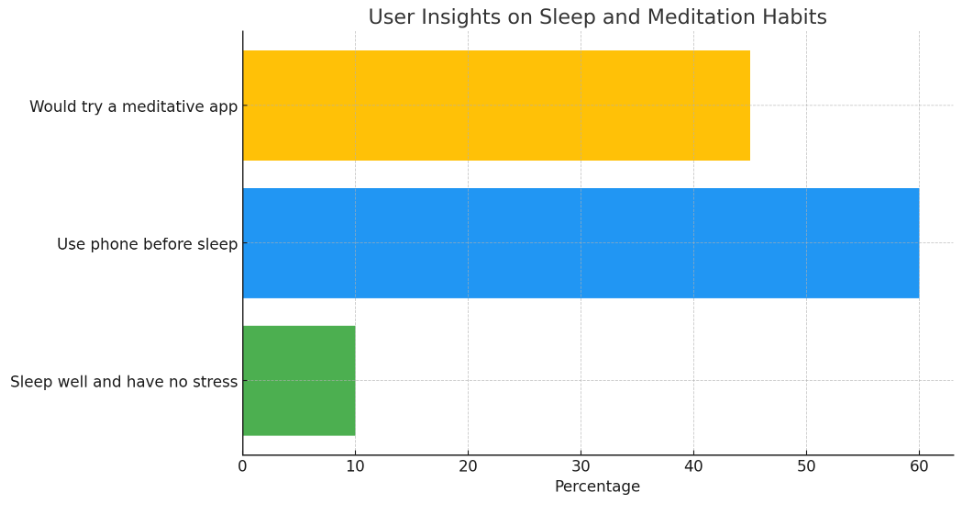
Here's a chart that visualizes the user insights regarding sleep and meditation habits. The data shows that:
10% of users sleep well and have no stress.
60% of users use their phones before going to sleep.
45% of users would consider trying a meditative app.
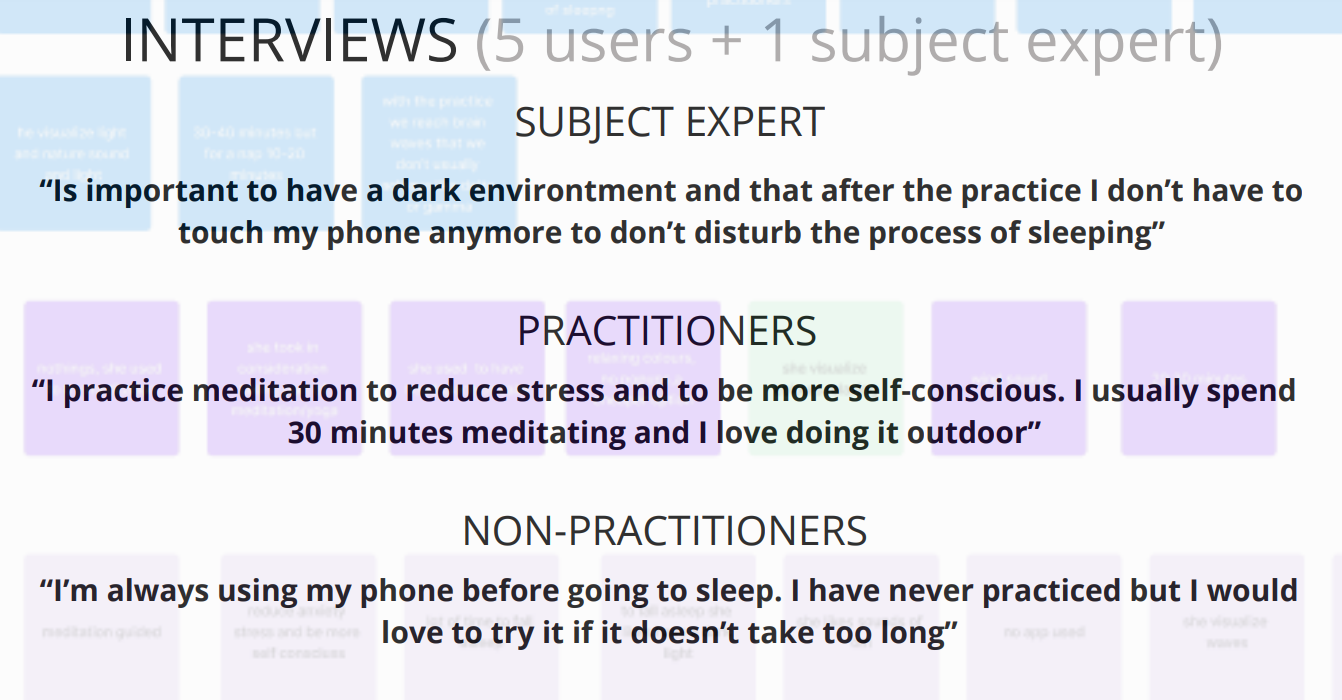
From the survey results, I developed a script for interviews, engaging with one subject matter expert and five users, both practitioners and non-practitioners. These interviews provided valuable insights into their perspectives on the topic, including ideal session lengths, past experiences with meditation, preferences for relaxing environments, usage of yoga or meditation apps, and the primary issues they face.
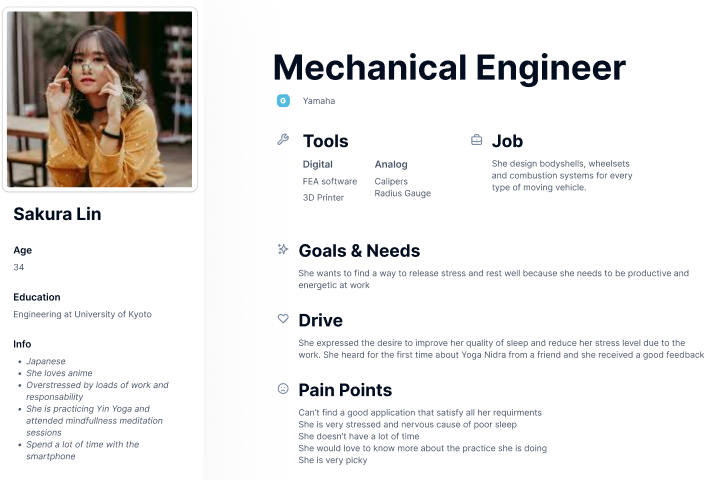
With the insights gathered, I was able to create my user persona:
Sakura Lin, 34 years old
Goals: Improve sleep quality and reduce work-related stress.
Background: Sakura first heard about Yoga Nidra from a friend who gave her positive feedback. However, she struggles to find an app that meets all her needs.
Pain Points:
High stress and nervousness due to poor sleep.
Limited time for self-care practices.
Frustration with the lack of detailed information about the practices she engages in.
A discerning nature, making her particularly selective about the tools and resources she uses.
This persona encapsulates the challenges and desires of a typical user in need of a tailored, comprehensive solution for better sleep and stress management through Yoga Nidra.
Building on these insights, I identified the problem statement:
Users need help to find a way to release tension in short time because they are feeling stressed and nervous due to work and bad habits which are impacting their wellbeing and quality of sleep
The main challenge I faced was figuring out how to make Yoga Nidra approachable for everyone. Typically, when we think of yoga, it brings to mind earthy, organic vibes. However, I wanted to move beyond that niche. To attract a broader audience, I focused on the design aspect. I opted for a minimalistic approach, using dark colors to evoke a sense of night and calm, allowing the eyes to relax and creating an inviting atmosphere for all users, not just traditional yoga enthusiasts.
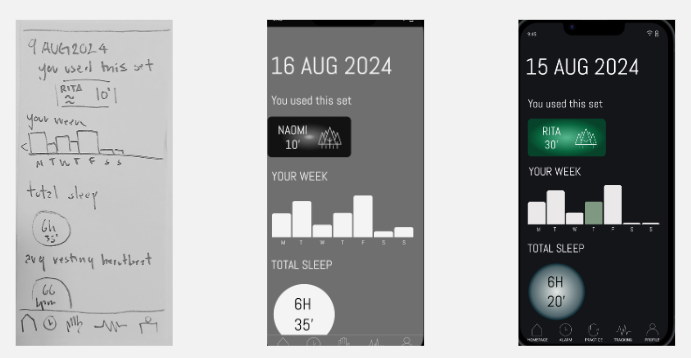
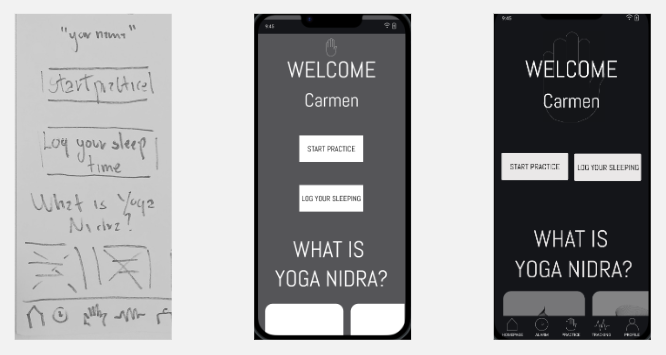
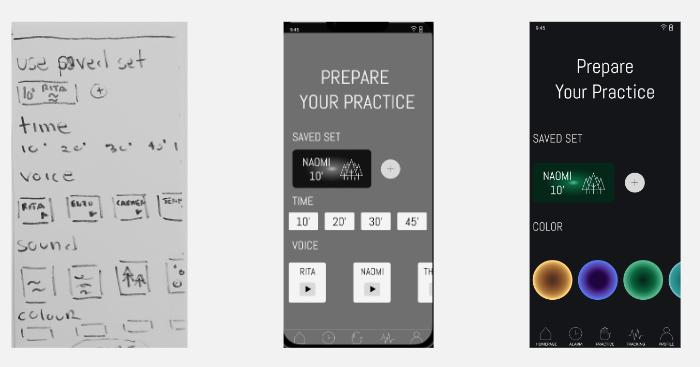
I began the ideation process using the Crazy Eights method to rapidly brainstorm and explore different layout possibilities. Below, you'll see the progression from low-fidelity sketches to high-fidelity designs for the sleep tracking page, homepage, and "Prepare Your Practice" page.
During usability testing, I asked users to share their expectations, provide feedback, and describe what they perceived on each page. Based on their insights, I made several refinements:
Sleep Tracking Page: While the overall layout remained consistent, I adjusted the color scheme to create a more harmonious and calming experience.
Homepage: I reorganized the buttons to achieve better visual balance and alignment with the overall design, enhancing user flow and clarity.
Prepare Your Practice Page: I restructured the settings to offer a preview of the session, helping users understand what to expect and making the setup process more intuitive.
These adjustments were made to ensure the design not only met user expectations but also provided a seamless and aesthetically pleasing experience.
Later in the process, I conducted a desirability test, which provided valuable insights into the design's appeal. This testing phase offered deeper understanding of user preferences, especially regarding the use of dark colors. While the dark palette aimed to create a calming, night-like atmosphere, the challenge was ensuring the design didn’t come across as heavy or rigid, which could detract from the overall user experience.
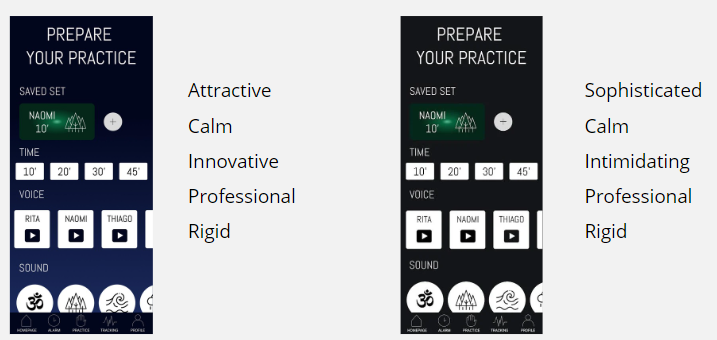
I carefully considered the feedback received and drew inspiration from the renowned artist James Turrell for the moodboard. Turrell’s work, which focuses on the perception of space and light, aligns perfectly with the meditative and calming experience I wanted to create. His use of light to evoke introspection and tranquility strongly influenced the design direction, helping to craft a visual experience that resonates with the goals of the project.

HIGH FIDELITY PROTOTYPE
For the high-fidelity prototype, I designed two distinct user flows:
Initial Setup Flow: This flow is triggered the first time the user opens the app and is presented in a light theme. The goal here is to guide the user through the initial setup, which is a one-time process. During this flow, users will:
Enter basic information like their name and birthday.
Allow notifications.
Connect their smartwatch for integrated tracking.
Set an alarm for the next day.
Review instructions on how to use the app.
At the end of this setup, users can choose to start their first practice session immediately or delay it for later.
Regular Use Flow: Once the initial setup is complete, the app transitions to a dark theme, which will be the default theme moving forward. This design choice is intentional, as the app is primarily intended for use before sleep. The dark theme helps create a calming environment, minimizing eye strain and avoiding overstimulation, thereby supporting a relaxing bedtime routine.
The inspiration showcased in the moodboard was directly applied to the design of the practice session. I incorporated geometric shapes that mirror the rhythm of breathing, aiming to create a visually soothing experience. These shapes not only enhance the aesthetic but also contribute to a calming atmosphere, helping users to relax and focus during their practice.
SMARTWATCH
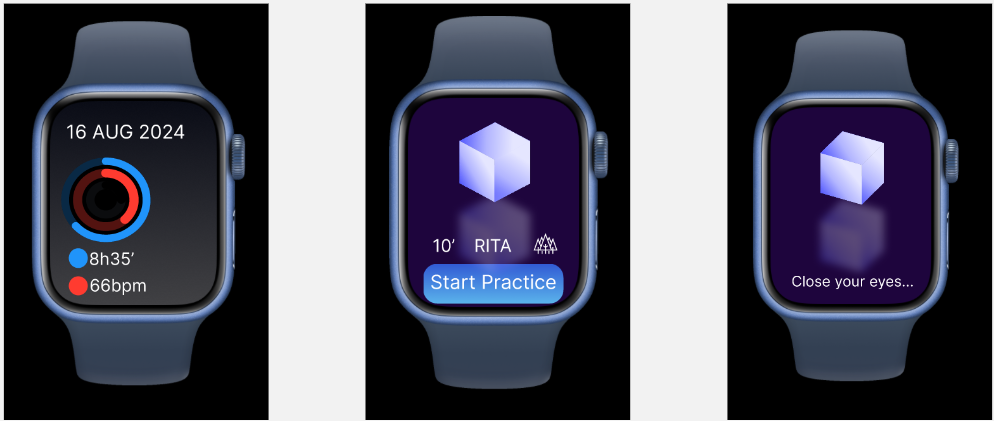
We were tasked with implementing three screens for the smartwatch version of the app. I focused on creating the sleep tracking page and the practice feature. These functionalities are particularly useful on a smartwatch, as they provide convenient access when traveling, allowing users to maintain their sleep and meditation routines seamlessly, no matter where they are.
CONCLUSION
To conclude, I’d like to reflect on the challenges I encountered during the implementation phase. One of the main difficulties was creating a dark layout that avoided feeling too heavy while ensuring the design remained approachable for a broad audience, beyond just the niche of Yoga Nidra enthusiasts. Despite these challenges, I thoroughly enjoyed working on this project and look forward to future improvements.
As for next steps, I’ve received feedback requesting notifications with tips on how to improve sleep quality. I believe this is a valuable feature to implement, so stay tuned for future updates!